

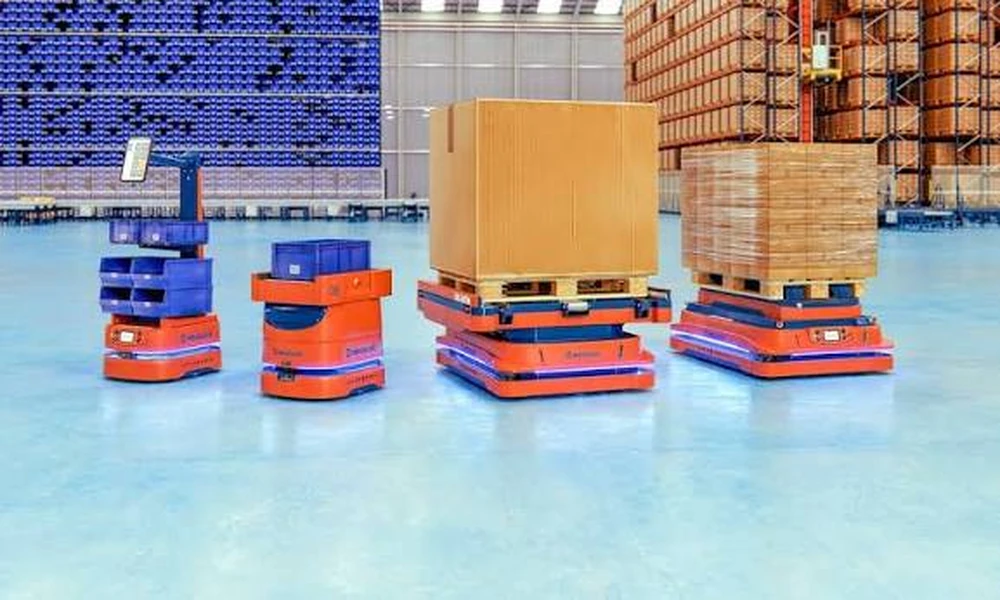
Just because the technology exists, does not mean warehouse automation is a strong fit for the business. It has to address a genuine operational issue.
Autonomous mobile robots can also cost-effectively enhance material movement, reduce repetitive tasks, and process growing fulfillment volumes in certain facilities. But when does that make sense for you?
These are seven indicators that your warehouse might be mature.
Staff Spend Too Much Time Walking
Note that a significant portion of the typical shift is spent travelling from location to location.
If employees constantly walk long distances to go for parts or products, precious time of work is getting wasted.
Autonomous mobile robots are capable of alleviating a great deal of these repetitive trips, so employees can be freed up to work on activities that need more focus.
Order Volumes Keep Increasing
A warehouse able to fulfill the orders of today successfully may falter once demand steps up a notch.
The other option is to hire more staff, a solution that sounds good from solving this in the long term but not always effective.
Autonomous robots add extra transport capacity, while not forcing every additional order to be manually dealt with.
Your Team is Performing Very Repetitive Tasks
Many warehouse jobs involve performing the same motion hundreds of times a day.
Workers can repeat the process of taking totes from picking areas then moving them to packing stations.
This type of predictability is usually good for autonomous mobile robots (AMRs) since multiple transport routes can be carried out by the robot while workers focus on other jobs.
Your Warehouse Layout Changes
Businesses grow and change. Storage areas may move. New equipment may be installed. Production zones may be expanded.
Autonomous mobile robotics (AMR) in environments with non-fixed environments also why worth considering if flexibility is required by your facility.
That can be critical in situations when a warehouse needs to pivot but not necessarily tear down its entire material-handling solution.
You Need Better Workflow Visibility
Contemporary robotic systems are able to create critical operational information.
Managers can take a look at data pertaining to movement, workloads, and task completion depending on the system.
The data is useful in identifying delays and exposing parts of the warehouse that need improvement.
You Want Employees to Work Better
In any event, automation needn’t build up separating people from the operation.
Perhaps making your goal instead to limit needless footsteps and redundant transportation labor.
Therefore, it allows the employees to spend more time doing during activities such as picking accuracy, quality checks, solving problem, and anything with human judgement.
You are Solving a Problem
This might be the most crucial indicator of all:
First, before the buying autonomous mobile robots, define the problem
Is it a slow material movement? Long walking distances? Labor shortages? Increasing order volumes? Bottlenecks between workstations?
This should direct the strategy for automation.
Making Automation Work
The real business case behind autonomous mobile robots is dependent on how well they integrate into the operation.
You can build a better material-handling system with the right set of robots, software, workflow, and safety planning. If it is the wrong setup, it can be nothing but cost and complexity.
When a clear purpose and true operational goals are established, autonomous mobile robots will become an asset to businesses that are contending with increasing warehouse demands.
