

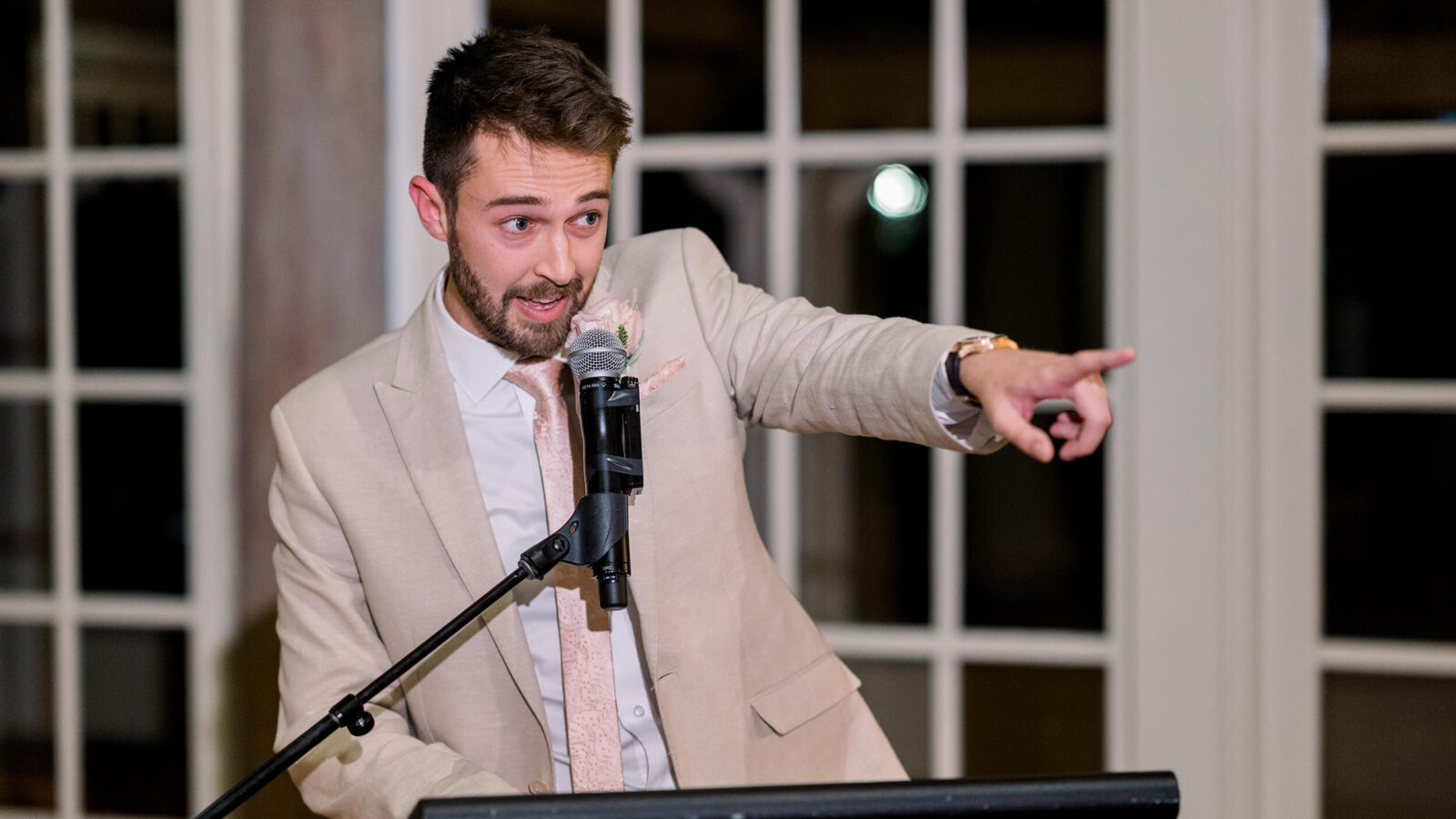
A great best man speech is 3 to 5 minutes long, tells one genuinely funny story, and ends with a heartfelt toast. This guide on how to write a best man speech emphasizes that honesty beats a polished template every time. The speeches people remember are the ones where you can tell the speaker actually knows the groom and means every word he says.
What Makes a Great Best Man Speech?
Three things separate a memorable best man speech from one that people politely clap through: specificity, warmth, and brevity. Specific stories beat generic compliments every time. ‘Mike is the most loyal person I know’ lands nowhere. ‘Mike once drove four hours on a Tuesday night to help me move a couch and never mentioned it again’ – that is a story.
Warmth means the room should feel good, not uncomfortable. A little gentle roasting is expected and enjoyed. Anything that would make the bride wince, offend either family, or reveal information the groom wished you hadn’t – leave it out. The wedding day is not the day for score-settling or oversharing.
Best Man Speech Structure – The Winning Formula
| Section | Purpose | Suggested Length |
| Introduction | Who you are and how you know the groom | 20-30 seconds |
| The Groom Story | One specific, funny or touching story | 60-90 seconds |
| Transition to the Bride | How she changed him for the better | 30-45 seconds |
| Welcome to the Family | Warm words for the bride + her family | 20-30 seconds |
| Closing Toast | Sincere wishes for the couple | 20-30 seconds |
| Total | Aim for this total length | 3 to 5 minutes |
Step-by-Step Guide to Writing Your Speech
Step 1 – Start with Who You Are
Not everyone in the room knows you. Open by introducing yourself and establishing your relationship with the groom in one or two sentences. Keep it brief – this is not your story, it is theirs.
Example: ‘For those I haven’t met yet, I’m James – I’ve been inflicting myself on [Groom’s name] since we were 11 years old and somehow he still chose me as his best man. I consider that either a testament to his character or a lapse in judgement. Probably both.’
Step 2 – Tell One Great Story About the Groom
One story, told well, is worth ten mediocre anecdotes listed in sequence. Choose a story that is specific, that reveals something genuinely good about the groom’s character (even through humour), and that the majority of the room will be able to follow without needing backstory.
A useful test: if you told this story at a dinner party with people who don’t know the groom, would it still be entertaining? If yes, it is probably a good story. If it only makes sense with context that would take three minutes to explain, find a different one.
Step 3 – Welcome the Bride (and Roast Gently)
This is where you turn the speech toward the couple rather than just the groom. Say something genuine about the bride – what you have noticed about how she makes the groom different, better, happier. Then, if the tone of the night allows, one gentle joke at the groom’s expense about how clearly out of his league she is tends to land well universally.
Step 4 – Wish the Couple Well
Keep this sincere and brief. Avoid clichés like ‘may you always be as happy as you are today’ – they sound like a greeting card because they come from greeting cards. Say something specific to this couple, this relationship, this day.
Step 5 – End with the Toast
Signal clearly that the toast is coming – people need a moment to pick up their glasses. A simple and direct close always works better than an elaborate final flourish. Raise your glass, say something short and genuine, and let the room drink.
Best Man Speech Dos and Don’ts
| Do | Don’t |
| Write it out in full, then condense | Wing it – even if you are confident |
| Practise out loud at least 5 times | Read it word-for-word from your phone |
| Time yourself – aim for 3-5 minutes | Go over 7 minutes under any circumstances |
| Include the bride warmly | Make it entirely about you and the groom |
| Keep humour inclusive and gentle | Make jokes about exes, debt, or past mistakes |
| Make eye contact with the room | Stare at your notes the whole time |
| End clearly with the toast signal | Trail off awkwardly without a clear ending |
How Long Should a Best Man Speech Be?
Three to five minutes is the sweet spot – and it is shorter than most people expect. At normal speaking pace (around 130 words per minute), five minutes is approximately 650 words. Write to that limit and you will thank yourself when you are standing at the microphone and the room’s attention is fully with you.
The speeches that outstay their welcome are almost always longer than seven minutes. No matter how good the material, attention starts drifting. The best man speech that everyone remembers fondly is almost always the one that left people wanting slightly more – not the one that covered every year of the groom’s life chronologically.
Tips for Delivering the Speech Confidently
Practise standing up, not sitting at a desk. The physical act of standing changes your breathing and posture in ways that affect how you project your voice.
Slow down when you think you are going the right speed. Nerves make everyone rush. If you feel like you are speaking slowly, you are probably speaking at the right pace for the room.
Pause after anything funny. Laughs need room to land and fade. If you speak through the laugh, the next sentence gets lost in the noise and momentum dies.
Look at people, not just the couple. Scan the room naturally. The grandparents sitting at the back matter as much as the couple at the head table.
Example Opening Lines You Can Adapt
‘Good evening everyone. For those I haven’t met, I’m [Name], and I’ve been [Groom]’s friend since [context]. When he asked me to be his best man, I said yes immediately – then spent the next six months wondering what I had agreed to.’
‘They say the best man is the groom’s closest friend. I like to think [Groom] chose me because of my qualities of loyalty, wisdom, and discretion. [Groom] tells me it was because everyone else said no.’
‘I’ve known [Groom] for [X] years. In that time I have seen him make a lot of decisions. Some excellent. Some less so. Meeting [Bride] – that was the best one.’
Frequently Asked Questions
What if I am not funny – can I still give a good speech?
Absolutely. Sincerity always lands better than a failed joke. If humour is not your natural style, lean into warmth and specific detail instead. A genuinely moving story about a friend’s loyalty or character will be remembered longer than a punchline that doesn’t quite connect.
Should I memorise the speech or read from notes?
Notes are fine and expected – this is not a performance competition. Write your speech in full, know it well enough that you can look up regularly and make eye contact, but do not stress about memorising it word for word. The notes are your safety net, not your script.
